USE CASES FOR SUPERCONDUCTING MASS DRIVERS

Defense and HYPERSONIC TESTING

SUPERCONDUCTOR DRIVE APPLICABLE OVER MULTIPLE DOMAINS

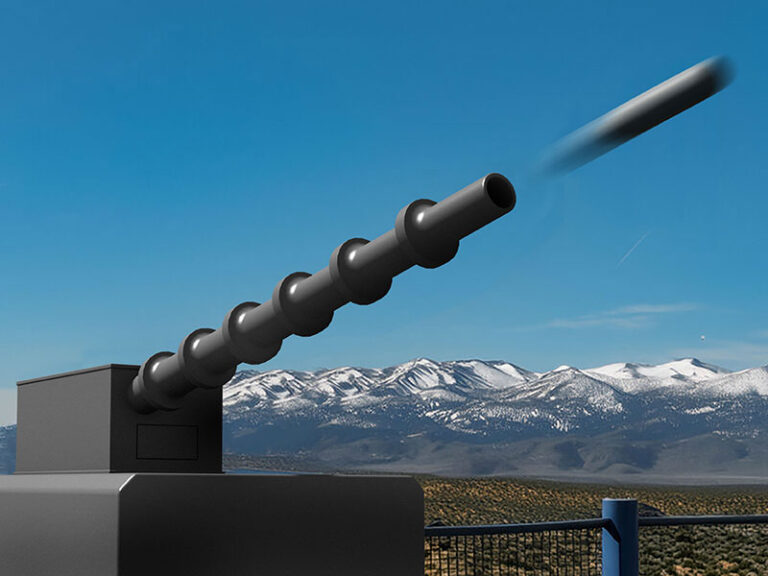
Drone Defense – Missile like performance with guided Gun munition economics and cadence

High Cadence

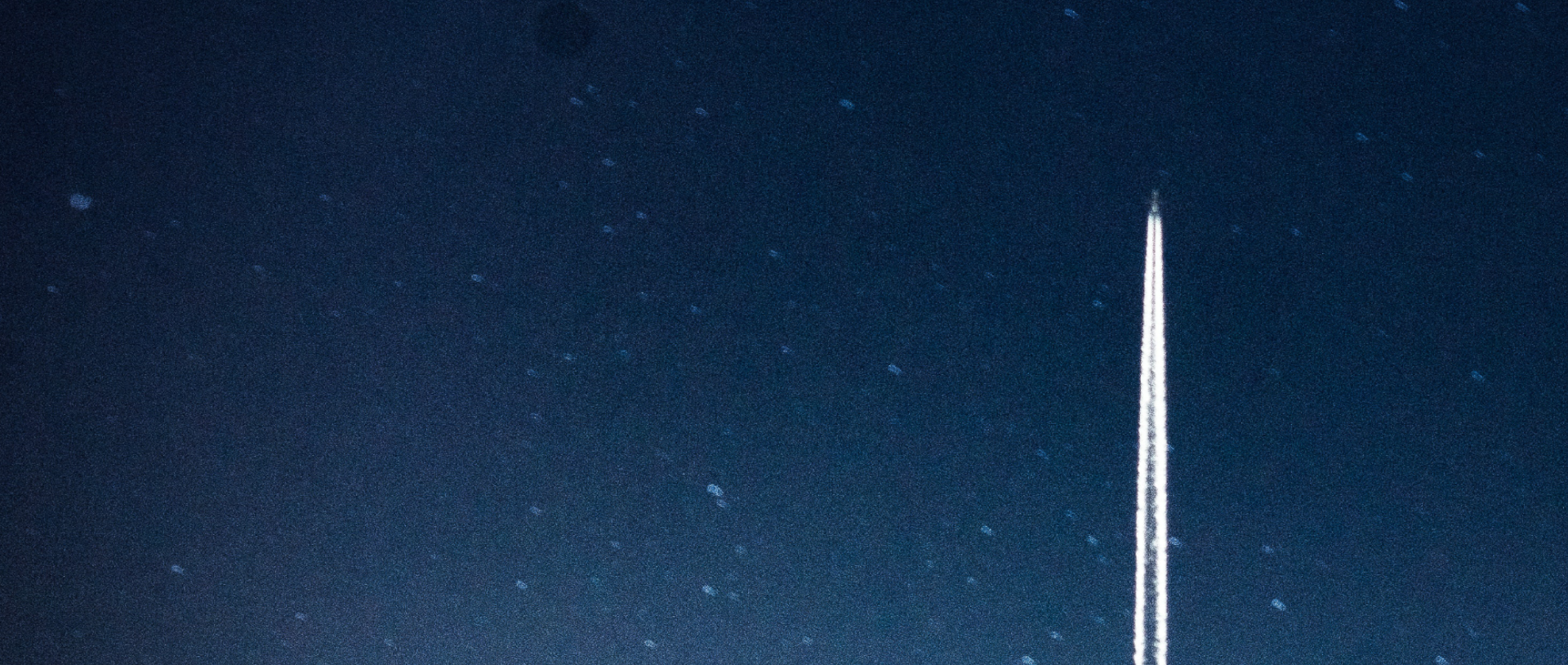
High Cadence Assured Access and Inland Launch to Space

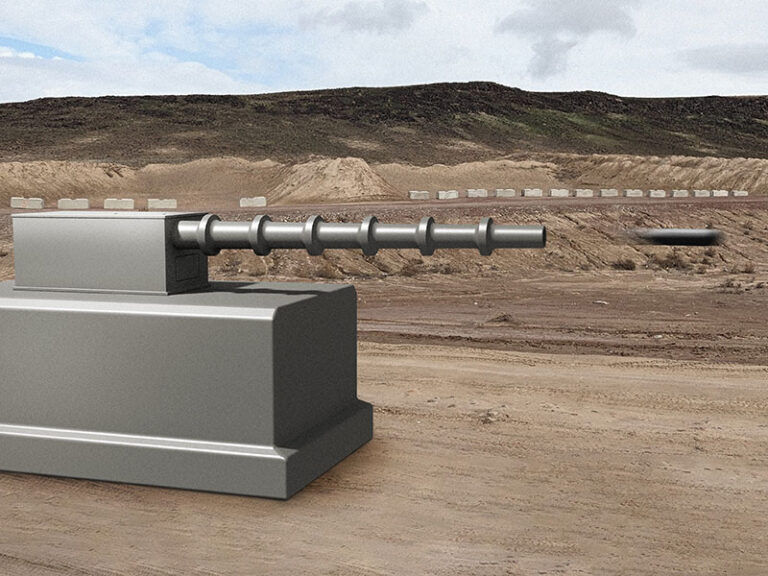
Hypersonic Testing at faster Velocities and lower cost

Lunar Launch

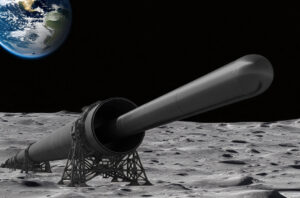
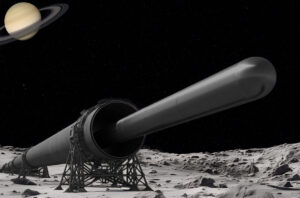
The moon’s shallow gravity well means exit velocities with as little as 1.7 km/s are sufficient for launch to orbit. Slightly more, and you can deliver raw materials anywhere in the solar system. Engineering difficulties grow exponentially with launch velocity, so it is hard to overstate the advantage of low orbital velocity over Earth, where orbital velocities of nearly 8 km/s are required.

Further, the moon’s ever-present vacuum and abundant sunshine for solar electric power greatly enable this low-cost launch technology.

NASA and others are committed to returning to the moon; this means commercialization is necessary. An enormous market need for raw materials (water, fuel, metals, and oxygen) on lunar and Earth orbits, at Lagrange points, and for Mars settlement is projected. Our launching technology is synergistic with early investments in lunar mining and in situ materials processing.

Earth Launch

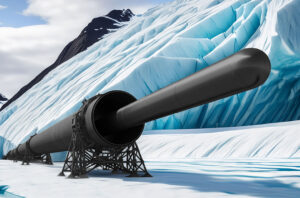
Earth launch was the original application for electromagnetic launch. Long before we understood the pitfalls of previous approaches and the opportunity to use high-temperature superconductors, Earth launch was the focus.

It will require a small “third stage” rocket motor for additional delta V and to overcome atmospheric drag. This is true both because acceleration to higher orbital velocities is geometrically harder and because the launch of orbital velocity cargo without control for circularization and final delta V in an ever-more-crowded Earth orbit is unthinkable.

Such a system would operate at costs of just a few dollars per pound to orbit for raw materials, transforming the space industry. The key economic drivers are high yearly tonnage, robust low-maintenance operation, delivery cylinders made of useful materials on orbit (upcycled or recycled), and low cost or return of reusable small third-stage rocket motors.

Asteroid Mining Raw Materials Transfer

Multiple studies and a growing body of evidence from new telescope technology tell us that near-Earth asteroids exist with trillions of dollars’ worth of every important raw material. From rare Earth metals to diamonds, trillions of dollars’ worth of these materials await.

To state the obvious, these materials, free as they may be, are there, not here. And it will be a very long time before remote deep space mining technology can begin to tap these resources. Still, when that time comes, raw materials will need to be moved from where they are to where they are wanted. In space, that means Delta V and orbital mechanics and, above all else, economics. Powered by small nuclear reactors or possibly solar, HST-based mass drivers will be the economic champs.


SUPERCONDUCTOR DRIVE FOR NUCLEAR ELECTRIC SPACE CRAFT

Super Conductor Quench Pulse Drive
  • High thrust levels for departing or entering gravity wells with half the reaction mass of methalox rocket motor fuels.
  • Leveraging electric power available on nuclear fission space craft.
  • Supports NEP space craft using ion drives for cruise with high ISP but low thrust.
  • Benign water (ice or slush) as a reaction mass is a superior mission mass, enabling life support, shielding and fuel production.